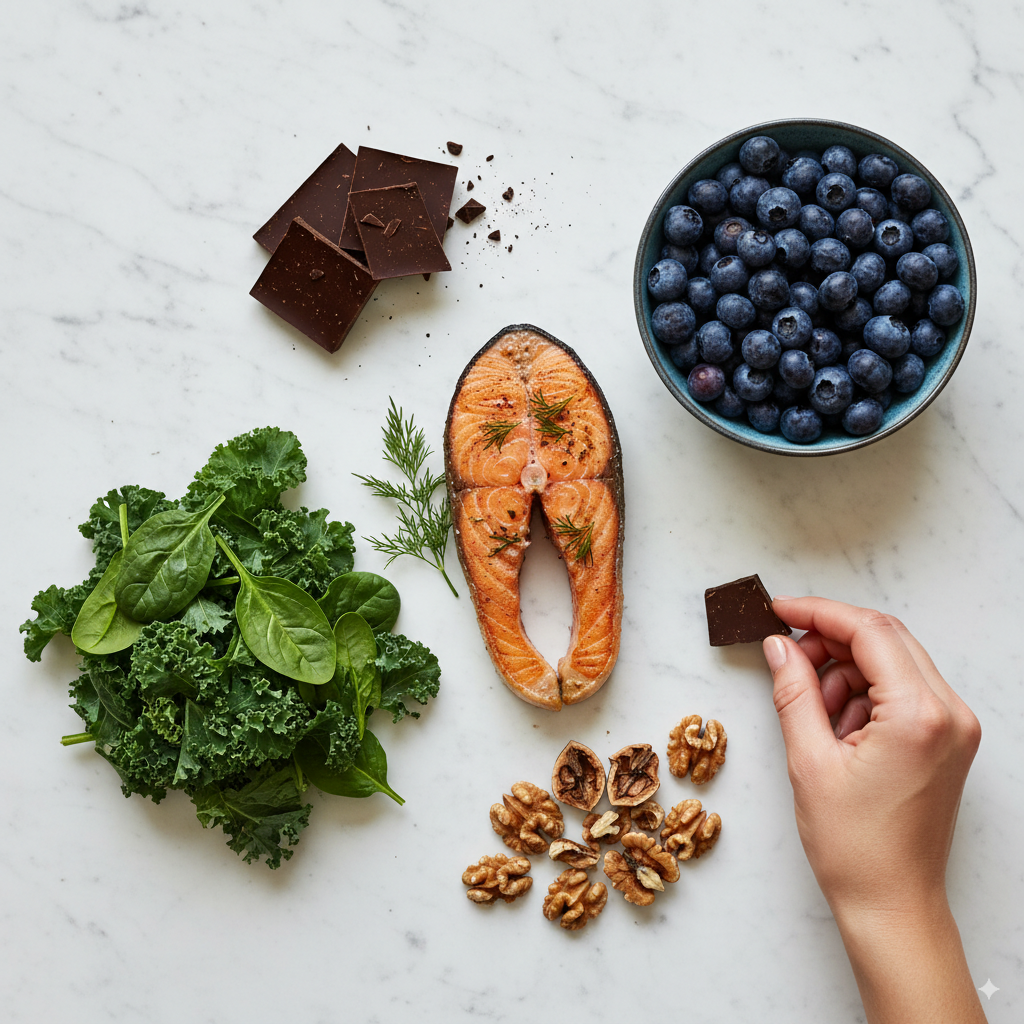
Top 5 Brain-Boosting Foods for Women Over 35: Your Delicious Guide to Mental Clarity
Remember when you could survive on coffee and determination alone? Those days might be behind us, but here’s the good news: the brain-boosting foods that can sharpen your focus, enhance your memory, and clear that mental fog are probably more delicious than anything you ate in your twenties. If you’re a woman over 35 looking to give your brain the VIP treatment it deserves, these five powerhouse foods are about to become your new best friends—and yes, chocolate made the list.
Why Your Brain Needs Different Foods After 35
Let’s get real for a moment. After 35, your brain is like a luxury car that’s been driven cross-country a few times—it still runs beautifully, but it needs premium fuel and a bit more maintenance to perform at its best. Hormonal changes, increased oxidative stress, and years of multitasking like a superhero have all taken their toll. Your neurons are practically begging for specific nutrients that younger brains can sometimes get away without.
The fascinating part? Your brain is incredibly responsive to nutrition at any age. In fact, women over 35 who strategically eat brain-boosting foods often report better mental clarity than they had in their twenties—probably because back then, “brain food” meant whatever was in the vending machine at 2 AM.
The Science Behind Brain Nutrition After 35
As estrogen levels begin their rollercoaster ride during perimenopause, your brain’s glucose metabolism changes. You need foods that provide steady energy, reduce inflammation, and support neurotransmitter production. The right nutrients can literally help your brain build new neural pathways, improve communication between brain cells, and protect against cognitive decline. Think of it as upgrading your brain’s operating system, one meal at a time.
Brain-Boosting Food #1: Wild-Caught Salmon (The Omega-3 Superstar)
If your brain could write a love letter to any food, it would be to wild-caught salmon. This pink powerhouse is loaded with DHA omega-3 fatty acids, which make up about 40% of the polyunsaturated fatty acids in your brain. After 35, your body becomes less efficient at converting plant-based omega-3s into the DHA your brain craves, making direct sources like salmon absolutely crucial.
Why Salmon Is Your Brain’s Best Friend
Studies show that women who eat fatty fish twice a week have a 70% lower risk of cognitive decline. Salmon also provides vitamin D (critical for mood regulation), B vitamins (essential for energy production), and selenium (a powerful antioxidant). Plus, the high-quality protein helps stabilize blood sugar, preventing those afternoon brain crashes that have you staring blankly at your computer screen.
Pro tip: Choose wild-caught Alaskan salmon when possible. It contains up to 75% more omega-3s than farmed varieties and fewer contaminants. Can’t stand salmon? Wild-caught sardines, mackerel, and rainbow trout are excellent alternatives that offer similar brain benefits.
Delicious Ways to Eat More Salmon
Forget boring grilled fillets. Try salmon poke bowls for lunch, smoked salmon on whole-grain toast for breakfast, or salmon tacos for Taco Tuesday. Make a big batch of salmon patties on Sunday and freeze them for quick brain-boosting meals throughout the week. Your neurons will practically do a happy dance.
Brain-Boosting Food #2: Blueberries (The Antioxidant Army)
These tiny blue spheres are basically nature’s brain pills. Blueberries contain more antioxidants than almost any other common fruit or vegetable, and their specific type of antioxidants—anthocyanins—can actually cross the blood-brain barrier to protect your brain cells directly.
The Blueberry Brain Connection
Research from Tufts University found that blueberries can literally reverse age-related cognitive decline. They improve communication between brain cells, reduce inflammation, and may even help grow new brain cells. For women over 35, the anthocyanins in blueberries have been shown to improve both memory and decision-making skills—perfect for those days when you need to remember where you put your keys while simultaneously managing three projects and planning dinner.
Kismet: Here’s something mind-blowing: A recent study in Norway discovered that women who ate wild bilberries (the European cousin of blueberries) while learning a new language showed 23% better retention rates than the control group. The researchers found that consuming these berries activated the same brain regions involved in language acquisition in children. Even more fascinating? The effect was most pronounced when the berries were eaten exactly 90 minutes before the learning session. Some language schools in Scandinavia are now incorporating “berry breaks” into their curriculum, serving students small portions of bilberries or blueberries during intensive courses. The compounds responsible, called pterostilbenes, are found in highest concentrations in wild varieties and frozen berries that have undergone cell wall breakdown.
Beyond the Basic Berry
Fresh blueberries are great, but don’t overlook frozen ones—they’re often more nutritious since they’re frozen at peak ripeness. Add them to smoothies, oatmeal, or yogurt. Make a brain-boosting blueberry chia pudding for breakfast, or keep dried blueberries (without added sugar) in your desk drawer for an afternoon brain boost. Aim for at least half a cup daily—your future self will thank you.
Brain-Boosting Food #3: Walnuts (The Brain-Shaped Wonder)
It’s almost too perfect that walnuts look like tiny brains—nature’s not-so-subtle hint about their cognitive benefits. These crunchy powerhouses are the only nut that contains significant amounts of ALA omega-3 fatty acids, plus they’re loaded with vitamin E, folate, and melatonin.
Why Walnuts Win for Women Over 35
A UCLA study found that women who ate walnuts daily showed improved cognitive function regardless of age, but the effects were particularly pronounced in women over 35. Walnuts improve working memory, processing speed, and cognitive flexibility—basically, they help you juggle all those mental balls without dropping them. They also contain compounds that reduce brain inflammation and support the production of new neurons.
The magic number? About 1/4 cup (or 7 whole walnuts) daily. That’s enough to provide brain benefits without overdoing the calories. Walnuts also help regulate sleep patterns thanks to their natural melatonin content—and we all know how crucial good sleep is for brain function after 35.
Creative Walnut Wins
Toast walnuts and toss them on salads for extra crunch. Blend them into homemade walnut butter (mix with a touch of cinnamon for a brain-boosting spread). Create a “brain trail mix” with walnuts, dark chocolate chips, and dried blueberries. Or try walnut-crusted chicken for dinner—your brain and your taste buds will both be satisfied.
Brain-Boosting Food #4: Dark Leafy Greens (The Cognitive Champions)
Kale, spinach, collard greens, and Swiss chard might not be the most exciting foods on this list, but they’re absolutely essential brain-boosting foods for women over 35. These greens are packed with vitamin K, lutein, folate, and beta carotene—nutrients that quite literally slow cognitive decline.
The Green Brain Revolution
A Rush University study found that people who ate just one serving of leafy greens daily had the cognitive abilities of someone 11 years younger. For women dealing with perimenopausal brain fog, that’s like finding the fountain of mental youth in the produce aisle. These greens also provide magnesium, which over 70% of women are deficient in, and which is crucial for hundreds of brain processes.
The folate in dark leafy greens is particularly important after 35, as it helps lower homocysteine levels—high homocysteine is linked to cognitive decline and poor memory. Plus, the nitrates in greens improve blood flow to the brain, delivering more oxygen and nutrients where they’re needed most.
Making Greens Great Again
If you’re not a salad person, no worries. Throw a handful of spinach into your morning smoothie (you won’t taste it with the blueberries, promise). Sauté kale with garlic and lemon for a quick side dish. Make kale chips for a crunchy snack. Add chopped greens to soups, stews, and pasta dishes. The goal is 2-3 cups of raw greens or 1 cup cooked daily—your brain cells will thank you.
Brain-Boosting Food #5: Dark Chocolate (The Delicious Brain Defender)
Finally, the moment you’ve been waiting for—permission to eat chocolate for your brain health. But we’re talking about real dark chocolate here (70% cacao or higher), not the sugar-loaded milk chocolate bar hiding in your desk drawer. Dark chocolate contains flavonoids, caffeine, and theobromine—a trifecta of brain-boosting compounds.
The Sweet Science of Chocolate and Cognition
Italian researchers found that women who consumed dark chocolate showed improved attention, processing speed, working memory, and verbal fluency within just two hours. Long-term consumption is even better—regular dark chocolate eaters have better memory recall and problem-solving skills. The flavonoids in dark chocolate increase blood flow to the brain and may even stimulate the growth of new neurons.
For women over 35, dark chocolate offers an additional benefit: it helps reduce cortisol levels, combating the stress that can wreak havoc on cognitive function. Plus, the small amount of caffeine provides a gentle energy boost without the jitters of coffee.
The Right Way to Eat Chocolate for Brain Health
Aim for 1-2 squares (about 1 ounce) of dark chocolate daily. Choose organic, fair-trade options when possible, as they tend to have higher flavonoid content. Pair dark chocolate with walnuts for a double brain boost, or melt it and drizzle over fresh berries. Try cacao nibs in your yogurt or smoothie for a crunchy chocolate hit. Just remember: the darker, the better—your brain prefers its chocolate like it prefers its humor.
Putting It All Together: Your Brain-Boosting Foods Action Plan
Daily Brain Food Goals
Creating a brain-healthy diet doesn’t mean overhauling everything overnight. Start by incorporating these five brain-boosting foods gradually:
- Morning: Smoothie with spinach, blueberries, and walnuts
- Lunch: Salmon salad with mixed greens and avocado
- Snack: Apple slices with walnut butter or a square of dark chocolate
- Dinner: Any protein with a generous serving of sautéed dark leafy greens
- Evening treat: A few squares of dark chocolate with herbal tea
Shopping List Essentials
Stock your kitchen with these brain-boosting basics: frozen wild-caught salmon fillets, frozen organic blueberries, raw walnuts (store in the fridge to maintain freshness), pre-washed organic greens, and a few bars of quality dark chocolate. Having these on hand makes brain-healthy eating automatic rather than aspirational.
The Bottom Line: Feeding Your Brain for the Long Game
The brain-boosting foods on this list aren’t just about preventing that 3 PM mental slump (though they’ll definitely help with that). They’re about giving your brain the nutrients it needs to thrive through all the challenges and changes that come after 35. Whether you’re navigating career pivots, raising teenagers, caring for aging parents, or all of the above, your brain needs premium fuel.
The beauty of these five brain-boosting foods is that they’re not just good for your cognitive function—they support heart health, reduce inflammation, improve mood, and may even help with those pesky perimenopausal symptoms. It’s like getting a full-body upgrade through your grocery list.
Start with one food and build from there. Your brain has been working hard for you for over three decades; it’s time to return the favor with some serious nutritional love. And remember, the fact that chocolate made this list is basically the universe’s way of saying you deserve something delicious with your health food. Embrace it, enjoy it, and feed that beautiful brain of yours well.