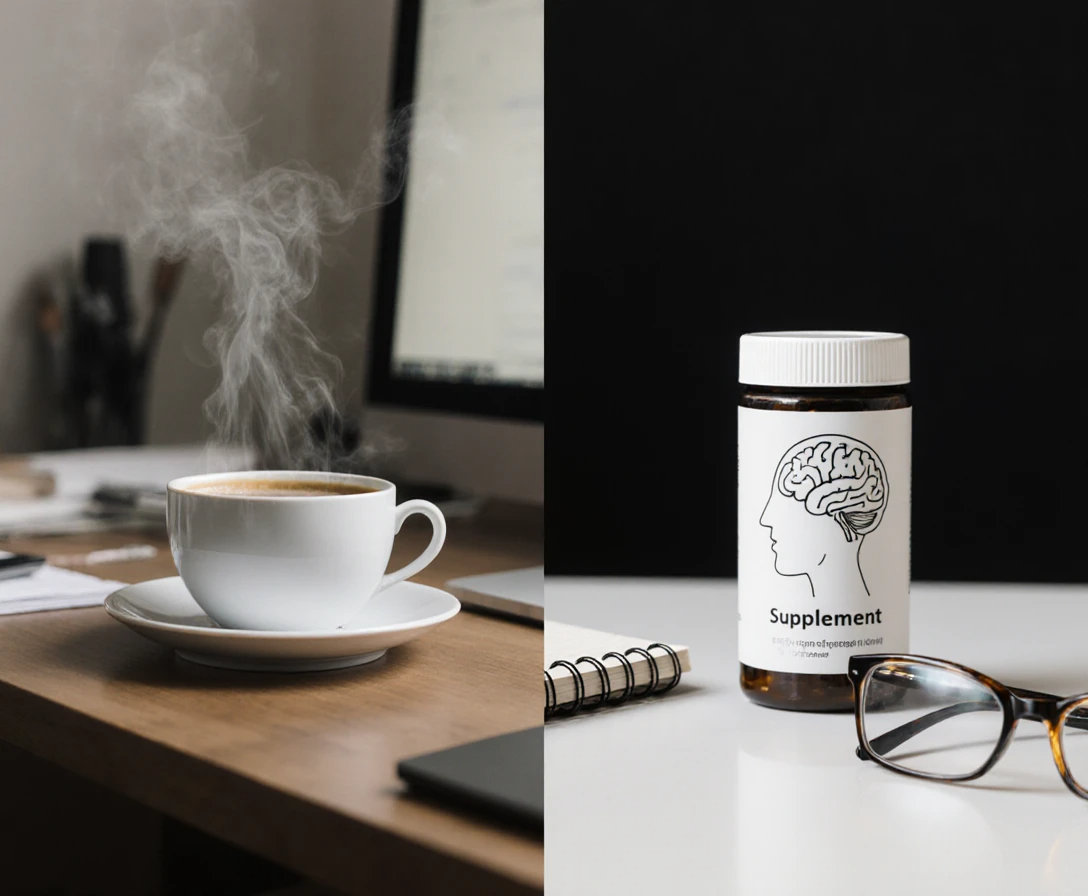
An evidence-aware comparison of caffeine and supplements marketed for focus, with practical guidance on timing, sleep, safety, and everyday concentration.
If you have ever wondered whether another coffee or a “brain-boosting” supplement might help you concentrate, the answer is not as simple as one winner versus another. Caffeine has a more established short-term effect on alertness, while products marketed as nootropics vary widely in ingredients, evidence, quality, and safety. This guide compares the two, explains where the evidence is stronger or weaker, and highlights the role of sleep, stress, meals, movement, and medication interactions.
The Ground Rules—What Counts in “Caffeine vs Nootropics”
Caffeine is a stimulant found in coffee, tea, cacao, and many sodas/energy drinks. It blocks adenosine receptors (which signal tiredness), making you feel more alert. In a Caffeine vs Nootropics comparison, caffeine is the quick, well-known sprinter: fast start, clear burst, potential crash.
“Nootropics” is a broad marketing and research term used for substances claimed to support attention, memory, alertness, or other aspects of cognition. The category includes prescription drugs, caffeine, nutrients, amino acids, herbs, and mushroom products, but these are not interchangeable and the evidence varies widely. Many over-the-counter products have not been shown to improve everyday focus reliably in healthy adults.
How Caffeine Helps Focus (and When It Backfires)
Why it works
Caffeine reduces the feeling of tiredness by blocking adenosine receptors in the brain. For many people, this can temporarily improve alertness and attention, but the effect depends on dose, tolerance, sleep, anxiety, medications, and individual sensitivity. It does not replace rest, and more caffeine does not necessarily produce better focus.
Typical sweet spot
Caffeine needs vary widely. A smaller amount may be enough for some people, while others are more sensitive to anxiety, palpitations, headaches, reflux, or sleep disruption. Rather than aiming for a fixed “ideal” dose, use the lowest amount that feels effective and avoid increasing it simply because the effect feels less noticeable over time.
The catch (especially after 35)
Caffeine can remain in the body for several hours, and clearance varies substantially between people. A dose taken in the afternoon may still affect sleep that night, even when falling asleep does not feel difficult. Because poor sleep can worsen next-day concentration, timing is often more important than squeezing in another cup.
When to use caffeine
- For occasional tasks when a temporary alertness boost may help.
- Earlier in the day, leaving enough time before bed to protect sleep.
- Alongside basic supports such as hydration, daylight, movement, regular meals, and adequate rest.
Supplements Marketed for Focus: What the Evidence Shows
L-theanine (often paired with caffeine)
L-theanine is an amino acid found naturally in tea. Some studies have examined it alone or alongside caffeine for attention and alertness, but findings are mixed and do not establish that supplements reliably improve focus for everyone. It may also affect people differently, so treat it as optional rather than a necessary partner to caffeine.
Citicoline (CDP-Choline)
Citicoline is a compound involved in cell-membrane and neurotransmitter pathways. It has been studied for several cognitive uses, but evidence for routine focus enhancement in otherwise healthy adults is still limited. It should not be presented as a predictable source of “clean mental energy,” and supplement quality and response can vary.
Rhodiola rosea
Rhodiola is an herbal supplement often marketed for stress, fatigue, and mental performance. However, current evidence is limited and does not establish that it reliably improves focus. Products can also vary in strength and composition, and some people may find it stimulating. Treat it as optional and discuss it with a clinician or pharmacist if you take medication or have a health condition.
Bacopa monnieri
Bacopa is an herbal supplement commonly marketed for memory and cognitive support. Some research has explored possible effects over several weeks, but results are not consistent enough to treat it as a dependable focus aid. It may also cause digestive side effects, and product quality can vary.
L-tyrosine
L-tyrosine is an amino acid the body uses to make several neurotransmitters. Some studies have looked at its effects during acute stress, sleep loss, or demanding conditions, but that does not mean it reliably improves everyday focus. It can interact with certain medications and thyroid conditions, so it should not be used casually as a pre-task booster.
Lion’s Mane (Hericium erinaceus)
Lion’s mane is a mushroom supplement marketed for cognitive and mood support. Early research is still limited, and it does not establish a reliable same-day or long-term focus benefit for healthy adults. Product quality, extract type, and dosage can vary widely, so avoid presenting it as a proven cognitive enhancer.
Omega-3s and B-Complex
Omega-3 fats and B vitamins support normal body and brain function, but supplements are most useful when they address an actual dietary gap or deficiency. Taking more does not automatically improve focus, and routine supplementation is not a substitute for balanced meals, sleep, or medical evaluation when concentration problems persist.
Caffeine vs Nootropics for Women 35+—Which Fits When?
If your main issue is sleep (or perimenopausal wake-ups)
Protecting sleep should come before adding stimulants or supplements. Keep caffeine modest and early, and pay attention to whether it worsens night waking, anxiety, or hot-flash-related sleep disruption. Supplements marketed for focus or sleep are not automatically appropriate, especially alongside medication or during pregnancy or breastfeeding, so discuss them with a clinician or pharmacist before use.
If stress and multitasking are the problem
Stress, poor sleep, skipped meals, and constant task-switching can all make concentration feel harder. Before adding supplements, simplify the workload where possible, use short focused work blocks, take movement breaks, and keep caffeine modest. Rhodiola, L-tyrosine, and other products marketed for stress-related focus have limited or situation-specific evidence and should not be treated as reliable everyday solutions.
If you need a same-day edge
Caffeine is the more predictable option for a short-term alertness boost, but individual tolerance varies. Use the smallest amount that feels effective, avoid repeated doses, and keep it early enough that it does not interfere with sleep. Combining caffeine with supplements is not necessary, and anyone taking medication or managing a health condition should check with a clinician first.
If you want steadier focus over time
Start with the foundations that most reliably support concentration: consistent sleep, regular meals, hydration, movement, and daylight exposure. Some supplements are marketed for longer-term cognitive support, but evidence varies by ingredient and product. Treat them as optional, not essential, and avoid assuming that a daily “stack” will improve focus.
Caffeine Timing and Supplement Caution
Timing often matters more than chasing a higher dose. Keep caffeine earlier in the day, use the smallest amount that feels effective, and pay attention to sleep, anxiety, palpitations, reflux, and headaches.
There is no single evidence-based dosing plan that applies to all nootropic supplements. Product strength, extract quality, medication interactions, and individual health conditions can vary considerably. Avoid combining several products at once, and discuss supplements with a qualified clinician or pharmacist if you take medication, are pregnant or breastfeeding, or have a medical condition.
Food, Habits, and “No-Supplement” Wins
Breakfast that behaves
A balanced breakfast can help some people maintain steadier energy through the morning. Aim for a combination of protein, fibre, and healthy fats, such as eggs with whole-grain toast, Greek yogurt with berries, or tofu with vegetables. There is no single breakfast formula that guarantees better focus, so choose foods that suit your appetite, health needs, and routine.
Light and movement
Brief outdoor light exposure and a short walk can support alertness, especially after long periods of sitting or screen use. These habits are low-risk and may reduce the urge to keep increasing caffeine, although they will not fix persistent concentration problems caused by poor sleep, stress, medication effects, or an underlying health issue.
Sleep rituals
A consistent wind-down routine, lower evening light, a comfortable bedroom, and regular sleep and wake times can support better sleep. These habits are not a cure-all, but they often matter more for next-day concentration than adding another stimulant or supplement.
Safety, Interactions & Red Flags (Read This)
This article is for general education and does not provide medical advice or a personalised supplement plan. Check with a clinician or pharmacist before using caffeine or supplements if you are pregnant or breastfeeding, take prescription medication, have anxiety, heart rhythm problems, high blood pressure, reflux, thyroid disease, or another medical condition.
Specific flags:
- Caffeine: May worsen anxiety, palpitations, reflux, headaches, or sleep disruption. Reduce or stop it if these effects appear.
- Rhodiola and other stimulating supplements: May feel activating for some people and can interact with medication.
- Bacopa: May cause digestive side effects in some users.
- L-tyrosine: Can interact with thyroid treatment and certain other medications.
- Multiple products: Combining caffeine with several supplements makes side effects and interactions harder to identify.
The Verdict—So, What’s Best for Focus?
Caffeine has the clearest evidence for a temporary increase in alertness, but it can also worsen anxiety, palpitations, reflux, and sleep. Supplements marketed as nootropics vary widely, and most do not have strong enough evidence to be treated as reliable focus aids for healthy adults. For many women over 35, the better starting point is modest, well-timed caffeine if tolerated, together with adequate sleep, regular meals, movement, hydration, and a review of stress, medications, or health issues when concentration problems persist.
Sources and medical note
This article is for general education and is not a substitute for medical advice, diagnosis, or treatment. Concentration difficulties can have many causes, including inadequate sleep, stress, medication effects, nutritional deficiencies, thyroid conditions, anxiety, depression, ADHD, and other health concerns. Seek professional advice if symptoms are persistent, worsening, or interfering with daily life.
Sources